Underrated Movies You Must Watch in 2026
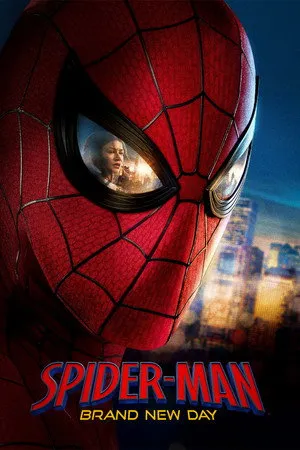
Spider-Man: Brand New Day
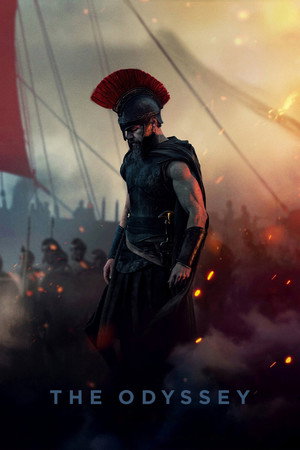
The Odyssey
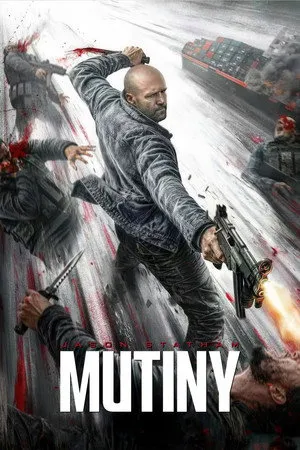
Mutiny
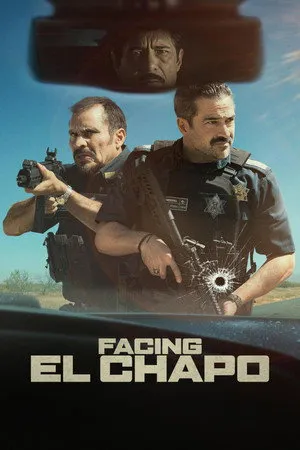
Facing El Chapo
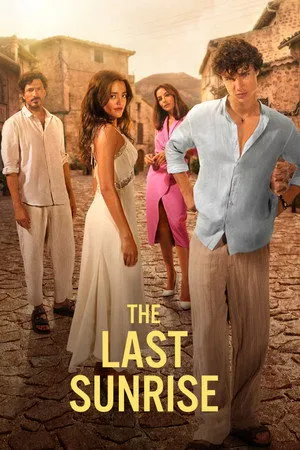
The Last Sunrise
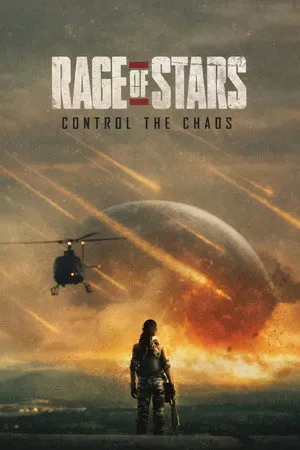
Rage of Stars
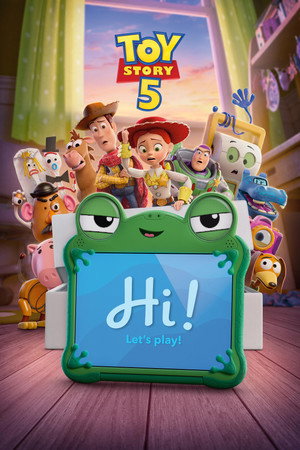
Toy Story 5
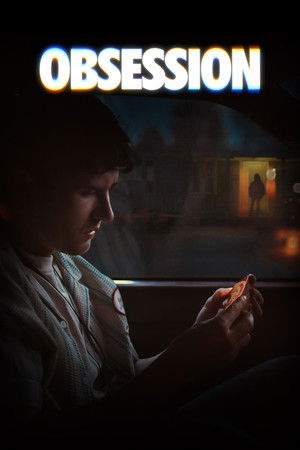
Obsession
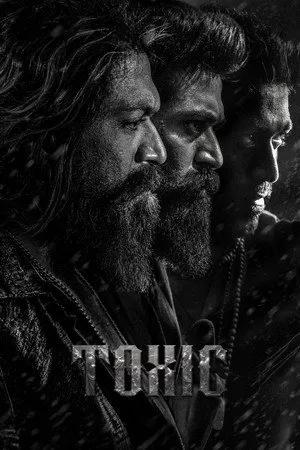
Toxic: A Fairy Tale for Grown-ups
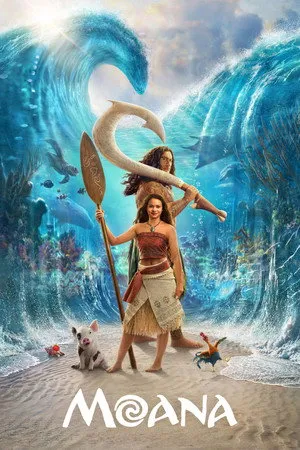
Moana
Underrated Movies You Must Watch in 2026
Every year, the cinematic landscape gets flooded with sequels, reboots, and franchise installments that dominate the conversation before they even hit theaters. But while the big studios battle for box office supremacy, a quieter wave of films often gets pushed to the margins. Some deserve to be seen. Some deserve to be celebrated. And some will genuinely surprise you if you take the chance. In 2026, amidst all the noise, there are ten movies that critics might brush aside or audiences might ignore for all the wrong reasons. These are the underrated films of the year, the hidden treasures, the brave experiments, and the soulful oddballs. Do not let them slip away.
First up is Spider-Man: Brand New Day. Yes, you read that correctly. In a franchise that has been rebooted three times already, a brand new Spider-Man film sounds like the last thing we need. But this is not the Peter Parker you remember. Directed by the indie visionary Chloe Zhao, known for Nomadland's quiet melancholy, Brand New Day ditches the multiverse chaos and the larger Marvel universe connections completely. Instead, this is a small, personal drama about a broke college student trying to pay rent while saving the city from a low-level crime wave. The action is intimate, the villain is a grieving mother who robs banks to pay for her son's medical bills, and the entire film is shot in natural light. It feels less like a superhero flick and more like a coming-of-age story with web-slinging. Zhao reportedly pushed for an almost silent film approach, and the test screenings were divisive because audiences expected jokes and cameos. That is exactly why it is underrated. If you want a Spider-Man movie that actually makes you feel something, skip the spectacle and give this a chance.
Next, we have The Odyssey, but do not walk in expecting Homer's ancient Greek epic in a straightforward way. This is a sci-fi retelling directed by Denis Villeneuve, who seems determined to outdo himself after Dune. The Odyssey follows a solitary astronaut, played by a heartbreakingly weathered Oscar Isaac, sent on a decades-long solo mission to find a habitable exoplanet. He is haunted by memories of his wife, his doubts, and the inability to communicate faster than the speed of light. The film is slow, poetic, and nearly dialogue-free for the first hour. It is a meditation on loneliness, time, and the mythic hero's journey reimagined for the age of deep space exploration. Why is it underrated? Critics have called it a self-indulgent art piece, but the cinematography alone, shot on IMAX cameras inside a rotating prop that mimics centrifugal gravity, deserves a theatrical screening. It is not a film you watch. It is a film you experience. And if you are willing to surrender to its pace, it will break your heart.
Mutiny is the genre shocker that no one was prepared for. Directed by the always-exciting Gareth Edwards, this is a naval action thriller set in the late 18th century, but with a twist that you will not see coming. The first half is a classic mutiny story: sailors on a British warship endure a tyrannical captain, and a charismatic first officer leads a rebellion. Then something happens. Without spoiling too much, the ship discovers an unexplored island that appears to rewrite physics, and the mutiny quickly spirals into a paranoid psychological horror with Lovecraftian undertones. Edwards filmed it all on practical sets, including a full-scale ship on a gimbal that could toss the crew around like rag dolls. The budget was modest, and the promotion was almost nonexistent, probably because the studio had no idea how to market a naval mutiny that becomes a cosmic nightmare. But for viewers who like their historical dramas with a side of existential dread, Mutiny is a white-knuckle masterpiece that deserves a cult following.
Then there is Facing El Chapo, which sounds like a standard drug lord documentary, but it is not. This is a documentary that turns the true-crime genre on its head. Directed by Laura Poitras, the Oscar-winning filmmaker behind Citizenfour, Facing El Chapo is composed entirely of interviews with people who never actually met Joaquín Guzmán. We hear from a retired DEA agent, a journalist who covered his escapes, a prison cook, a Mexican federal police officer, and a woman who claims to have dated one of his lieutenants. The talking heads contradict each other constantly, and archival footage gets intentionally mislabeled. The result is a probing examination of how myth replaces truth in the popular imagination. Poitras uses the technique to ask why we are so obsessed with charismatic criminals. It is a deeply challenging, almost academic work that will not satisfy anyone looking for a straightforward narcocorrido. But if you are willing to engage with its experimental structure, Facing El Chapo offers something more valuable than facts. It offers insight into our own complicity in the legend.
On a completely different emotional register, The Last Sunrise is the animated family film that most people have never heard of, and that is a tragedy. Directed by Mamoru Hosoda, the Japanese master behind Wolf Children and Mirai, this production was quietly released with almost no marketing. The story follows an elderly woman who lives alone on a small island and wakes up one morning to discover that the sun is rising in the west. She then embarks on a dreamlike journey across a surreal landscape to find the cosmic tortoise that carries the sun on its back. Along the way, she meets a talking crow, a grumpy tide goddess, and a child version of her deceased husband. It is a gorgeous hand-drawn meditation on grief, mortality, and the small beauties that we take for granted. Hosoda has said that he made the film for his aging mother, and that intimacy shines through every frame. The animation is fluid, the score is minimal and haunting, and the final scene will leave you sobbing in the best way. It did not get a wide release because distributors deemed it too slow for children, but that is utter nonsense. Children need slow stories sometimes. The Last Sunrise is a gentle, profound gift, and it deserves to be discovered.
Rage of Stars is a rare gem: a low-budget, sci-fi martial arts film that feels like it was beamed straight from the 1980s. Directed by the young Indonesian filmmaker Timo Tjahjanto, who brought us The Night Comes for Us, this one is a nonstop, gloriously violent balletic fight fest set in an orbital space station one hundred years in the future. The plot is deceptively simple: a disgraced fighter must climb through a hundred floors of combat to reach the station's AI overlord, who has stolen her grandmother's memory chip. That is it. But the fight choreography, performed by actual stunt performers with no visible CGI enhancing their movements, is jaw-dropping. Every punch sounds like a thunderclap, every kick sends bodies sliding across metallic floors, and the zero-gravity sequences are some of the most inventive fight scenes I have ever seen. The movie was almost abandoned when its original studio pulled funding, and it barely received a digital release. But for fans of visceral action cinema, Rage of Stars is a shot of pure adrenaline. It does not pretend to be high art. It simply delivers exactly what its title promises, and that kind of honest genre filmmaking is all too rare these days.
Now, you are probably thinking, Toy Story 5? Underrated? That is a gigantic franchise. But hear me out. This fifth installment, directed by the brilliant but unconventional Gillian Anderson in her feature animated debut, is a radically different beast from its predecessors. The toys have aged. Woody is held together by thread, Buzz's voice box is glitchy, and the entire story takes place in a single room, a young girl's bedroom after a family moves into a tiny apartment. There is no epic adventure, no villain, no chase through a city. Instead, it is a quiet, philosophical meditation on purpose, aging, and the idea of being outlived by the children who loved you. There are no new toys introduced, only flashbacks to memories that may or may not be true. It almost feels like a chamber drama for toys. Parents expected another zany adventure, and their kids were confused by the lack of slapstick. As a result, the film received mixed word of mouth. But for adults who grew up with these characters, Toy Story 5 offers a profound and cathartic conclusion to their story arc. It is a movie about growing up, letting go, and finding peace in the quiet moments. That is not what the trailers promised. But it is exactly what we needed.
Obsession is another quiet misfire, but a fascinating one. Directed by the singularly brilliant Ari Aster, this is a psychological horror film that trades his usual jump scares for pure, suffocating dread. It follows a mid-level corporate employee who becomes convinced that his reflection is living a better life than him. What starts as a metaphorical midlife crisis quickly becomes a literal nightmare when his reflection begins to move independently. Aster shoots the entire film with mirrored surfaces, every scene has a subtle reflection in a window, a glass table, or a polished floor, and you will find yourself scanning backgrounds for anomalies. It is an incredibly dense, detail-filled film that rewards multiple viewings. But audiences found it slow and abstract, and the marketing did not know whether to sell it as a thriller or an art film. The truth is it is a brilliant study of narcissism and existential dread, with a central performance from Adam Driver that is unnervingly restrained. If you are tired of horror movies that rely on loud noises and cheap scares, Obsession is the kind of intellectual creepfest that will stay with you for weeks.
Toxic: A Fairy Tale for Grown-ups is the most bizarre film on this list, and that is saying something. Directed by Yorgos Lanthimos, who has made a career out of strange, uncomfortable comedies, this is a live-action fairy tale set in a decaying post-industrial city where the citizens have all been infected with a mysterious substance that makes their emotions manifest physically. Anger makes your skin turn red and blister, sadness makes you weep acid, and joy makes you temporarily inflate like a balloon. The story follows a princess, but not a real princess. She is a factory worker who has inherited a magical crown that is actually a rusty bicycle rim. The plot is nonsensical in the best way, full of non-sequiturs, deadpan humor, and grotesque body horror. Lanthimos shot it in 16mm film with overly saturated primary colors, giving it a disorienting, candy-coated nightmare vibe. It is a movie that defies easy description, and it was completely ignored by mainstream audiences because the trailer was almost unreadable as entertainment. But if you are willing to embrace the weird, Toxic is a darkly hilarious and deeply affecting allegory about how emotions have become commodified in modern society. Do not see it sober. See it curious.
Finally, we come to Moana, and yes, I am serious. The live-action remake of Disney's beloved 2016 animated film, directed by the talented Taika Waititi, is being written off as just another cash-grab remake. But that dismissive attitude overlooks what Waititi has actually done here. Instead of a shot-for-shot copy, he has reimag
Every year, the cinematic landscape gets flooded with sequels, reboots, and franchise installments that dominate the conversation before they even hit theaters. But while the big studios battle for box office supremacy, a quieter wave of films often gets pushed to the margins. Some deserve to be seen. Some deserve to be celebrated. And some will genuinely surprise you if you take the chance. In 2026, amidst all the noise, there are ten movies that critics might brush aside or audiences might ignore for all the wrong reasons. These are the underrated films of the year, the hidden treasures, the brave experiments, and the soulful oddballs. Do not let them slip away.
First up is Spider-Man: Brand New Day. Yes, you read that correctly. In a franchise that has been rebooted three times already, a brand new Spider-Man film sounds like the last thing we need. But this is not the Peter Parker you remember. Directed by the indie visionary Chloe Zhao, known for Nomadland's quiet melancholy, Brand New Day ditches the multiverse chaos and the larger Marvel universe connections completely. Instead, this is a small, personal drama about a broke college student trying to pay rent while saving the city from a low-level crime wave. The action is intimate, the villain is a grieving mother who robs banks to pay for her son's medical bills, and the entire film is shot in natural light. It feels less like a superhero flick and more like a coming-of-age story with web-slinging. Zhao reportedly pushed for an almost silent film approach, and the test screenings were divisive because audiences expected jokes and cameos. That is exactly why it is underrated. If you want a Spider-Man movie that actually makes you feel something, skip the spectacle and give this a chance.
Next, we have The Odyssey, but do not walk in expecting Homer's ancient Greek epic in a straightforward way. This is a sci-fi retelling directed by Denis Villeneuve, who seems determined to outdo himself after Dune. The Odyssey follows a solitary astronaut, played by a heartbreakingly weathered Oscar Isaac, sent on a decades-long solo mission to find a habitable exoplanet. He is haunted by memories of his wife, his doubts, and the inability to communicate faster than the speed of light. The film is slow, poetic, and nearly dialogue-free for the first hour. It is a meditation on loneliness, time, and the mythic hero's journey reimagined for the age of deep space exploration. Why is it underrated? Critics have called it a self-indulgent art piece, but the cinematography alone, shot on IMAX cameras inside a rotating prop that mimics centrifugal gravity, deserves a theatrical screening. It is not a film you watch. It is a film you experience. And if you are willing to surrender to its pace, it will break your heart.
Mutiny is the genre shocker that no one was prepared for. Directed by the always-exciting Gareth Edwards, this is a naval action thriller set in the late 18th century, but with a twist that you will not see coming. The first half is a classic mutiny story: sailors on a British warship endure a tyrannical captain, and a charismatic first officer leads a rebellion. Then something happens. Without spoiling too much, the ship discovers an unexplored island that appears to rewrite physics, and the mutiny quickly spirals into a paranoid psychological horror with Lovecraftian undertones. Edwards filmed it all on practical sets, including a full-scale ship on a gimbal that could toss the crew around like rag dolls. The budget was modest, and the promotion was almost nonexistent, probably because the studio had no idea how to market a naval mutiny that becomes a cosmic nightmare. But for viewers who like their historical dramas with a side of existential dread, Mutiny is a white-knuckle masterpiece that deserves a cult following.
Then there is Facing El Chapo, which sounds like a standard drug lord documentary, but it is not. This is a documentary that turns the true-crime genre on its head. Directed by Laura Poitras, the Oscar-winning filmmaker behind Citizenfour, Facing El Chapo is composed entirely of interviews with people who never actually met Joaquín Guzmán. We hear from a retired DEA agent, a journalist who covered his escapes, a prison cook, a Mexican federal police officer, and a woman who claims to have dated one of his lieutenants. The talking heads contradict each other constantly, and archival footage gets intentionally mislabeled. The result is a probing examination of how myth replaces truth in the popular imagination. Poitras uses the technique to ask why we are so obsessed with charismatic criminals. It is a deeply challenging, almost academic work that will not satisfy anyone looking for a straightforward narcocorrido. But if you are willing to engage with its experimental structure, Facing El Chapo offers something more valuable than facts. It offers insight into our own complicity in the legend.
On a completely different emotional register, The Last Sunrise is the animated family film that most people have never heard of, and that is a tragedy. Directed by Mamoru Hosoda, the Japanese master behind Wolf Children and Mirai, this production was quietly released with almost no marketing. The story follows an elderly woman who lives alone on a small island and wakes up one morning to discover that the sun is rising in the west. She then embarks on a dreamlike journey across a surreal landscape to find the cosmic tortoise that carries the sun on its back. Along the way, she meets a talking crow, a grumpy tide goddess, and a child version of her deceased husband. It is a gorgeous hand-drawn meditation on grief, mortality, and the small beauties that we take for granted. Hosoda has said that he made the film for his aging mother, and that intimacy shines through every frame. The animation is fluid, the score is minimal and haunting, and the final scene will leave you sobbing in the best way. It did not get a wide release because distributors deemed it too slow for children, but that is utter nonsense. Children need slow stories sometimes. The Last Sunrise is a gentle, profound gift, and it deserves to be discovered.
Rage of Stars is a rare gem: a low-budget, sci-fi martial arts film that feels like it was beamed straight from the 1980s. Directed by the young Indonesian filmmaker Timo Tjahjanto, who brought us The Night Comes for Us, this one is a nonstop, gloriously violent balletic fight fest set in an orbital space station one hundred years in the future. The plot is deceptively simple: a disgraced fighter must climb through a hundred floors of combat to reach the station's AI overlord, who has stolen her grandmother's memory chip. That is it. But the fight choreography, performed by actual stunt performers with no visible CGI enhancing their movements, is jaw-dropping. Every punch sounds like a thunderclap, every kick sends bodies sliding across metallic floors, and the zero-gravity sequences are some of the most inventive fight scenes I have ever seen. The movie was almost abandoned when its original studio pulled funding, and it barely received a digital release. But for fans of visceral action cinema, Rage of Stars is a shot of pure adrenaline. It does not pretend to be high art. It simply delivers exactly what its title promises, and that kind of honest genre filmmaking is all too rare these days.
Now, you are probably thinking, Toy Story 5? Underrated? That is a gigantic franchise. But hear me out. This fifth installment, directed by the brilliant but unconventional Gillian Anderson in her feature animated debut, is a radically different beast from its predecessors. The toys have aged. Woody is held together by thread, Buzz's voice box is glitchy, and the entire story takes place in a single room, a young girl's bedroom after a family moves into a tiny apartment. There is no epic adventure, no villain, no chase through a city. Instead, it is a quiet, philosophical meditation on purpose, aging, and the idea of being outlived by the children who loved you. There are no new toys introduced, only flashbacks to memories that may or may not be true. It almost feels like a chamber drama for toys. Parents expected another zany adventure, and their kids were confused by the lack of slapstick. As a result, the film received mixed word of mouth. But for adults who grew up with these characters, Toy Story 5 offers a profound and cathartic conclusion to their story arc. It is a movie about growing up, letting go, and finding peace in the quiet moments. That is not what the trailers promised. But it is exactly what we needed.
Obsession is another quiet misfire, but a fascinating one. Directed by the singularly brilliant Ari Aster, this is a psychological horror film that trades his usual jump scares for pure, suffocating dread. It follows a mid-level corporate employee who becomes convinced that his reflection is living a better life than him. What starts as a metaphorical midlife crisis quickly becomes a literal nightmare when his reflection begins to move independently. Aster shoots the entire film with mirrored surfaces, every scene has a subtle reflection in a window, a glass table, or a polished floor, and you will find yourself scanning backgrounds for anomalies. It is an incredibly dense, detail-filled film that rewards multiple viewings. But audiences found it slow and abstract, and the marketing did not know whether to sell it as a thriller or an art film. The truth is it is a brilliant study of narcissism and existential dread, with a central performance from Adam Driver that is unnervingly restrained. If you are tired of horror movies that rely on loud noises and cheap scares, Obsession is the kind of intellectual creepfest that will stay with you for weeks.
Toxic: A Fairy Tale for Grown-ups is the most bizarre film on this list, and that is saying something. Directed by Yorgos Lanthimos, who has made a career out of strange, uncomfortable comedies, this is a live-action fairy tale set in a decaying post-industrial city where the citizens have all been infected with a mysterious substance that makes their emotions manifest physically. Anger makes your skin turn red and blister, sadness makes you weep acid, and joy makes you temporarily inflate like a balloon. The story follows a princess, but not a real princess. She is a factory worker who has inherited a magical crown that is actually a rusty bicycle rim. The plot is nonsensical in the best way, full of non-sequiturs, deadpan humor, and grotesque body horror. Lanthimos shot it in 16mm film with overly saturated primary colors, giving it a disorienting, candy-coated nightmare vibe. It is a movie that defies easy description, and it was completely ignored by mainstream audiences because the trailer was almost unreadable as entertainment. But if you are willing to embrace the weird, Toxic is a darkly hilarious and deeply affecting allegory about how emotions have become commodified in modern society. Do not see it sober. See it curious.
Finally, we come to Moana, and yes, I am serious. The live-action remake of Disney's beloved 2016 animated film, directed by the talented Taika Waititi, is being written off as just another cash-grab remake. But that dismissive attitude overlooks what Waititi has actually done here. Instead of a shot-for-shot copy, he has reimag