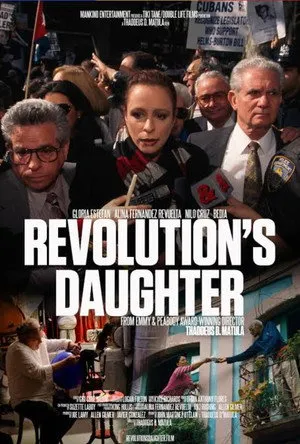
Revolution's Daughter (2026)
Director: Thaddeus D. Matula
Cast: Alina Fernández Revuelta, Fidel Castro, Gloria Estefan
More About This Film
Revolution's Daughter is a 2026 historical drama that explores the complex and often paradoxical relationship between women and the French Revolution. The narrative delves into how male revolutionary leaders relied on the active militant participation of women while simultaneously denying them the political rights they helped establish. As women were banned from the formal political sphere, the concept of 'woman' was transformed into an allegorical figure symbolizing Liberty and Equality, effectively constructing a new gender system at the foundation of modern liberal culture.
The film serves as a cinematic adaptation of themes found in interdisciplinary scholarly works, such as 'Rebel Daughters,' which examines the life and work of figures like Olympe de Gouges who claimed rights for women during this turbulent period. By focusing on the personal and political struggles of female actors in the revolutionary era, the movie highlights the tension between their public symbolic role and their private exclusion from power.
Production of the film has been noted for its commitment to historical accuracy and nuanced character development. The story invites audiences to reconsider traditional narratives of the French Revolution by centering the voices and experiences of those who were historically silenced or represented only as abstract ideals. This approach aligns with current critical discussions about gender and politics in 18th-century France, offering a fresh perspective on a well-trodden historical event.
- The film draws inspiration from the academic text 'Rebel Daughters', published by Oxford University Press, which analyzes the paradoxical role of women in the French Revolution.
- It focuses on the intersection of gender ideology and political action, highlighting figures like Louvet de Couvrai and Madame de Staël.
- The production emphasizes the distinction between women's actual militant citizenship in Paris and their exclusion from official political spheres.
- The narrative structure reflects the multi-part analysis found in source literature, covering revolutionary ideology, women as actors, and the construction of post-revolutionary gender systems.
Where to Watch
You can stream or purchase Revolution's Daughter through various digital platforms and rental services.
- Netflix – subscription
- Amazon Prime Video – rental / purchase
- Apple TV+ – rental / purchase
- Vudu – rental / purchase
- Google Play Movies & TV – rental / purchase
- Microsoft Store – rental / purchase